
Investors test the market, the product and the numbers. Very few test the one thing that decides whether the money turns into progress: how the founder plans to build the team.
The month after the cheque clears
Picture a seed-stage deeptech startup. This is an illustrative composite, not a single company.
The round closes on a Friday. By Monday, the board plan says: twelve hires across engineering, product and sales before the quarter ends.
Week one, the job descriptions are copied from a bigger company’s careers page. Week two, interviews are run by whoever has an hour free. Week three, the offer goes to the most impressive résumé, not the profile the product actually needs.
Week five, the new hire joins. There is no first-30-days plan, no clear owner, no definition of a good start.
By week six, the cracks show. Roadmap items slip. The founder, now interviewing between investor updates, becomes the bottleneck.
Nobody lied. Nothing dramatic happened. The plan just quietly started missing its dates.
We keep seeing this pattern. The trouble tends to surface within the first month to month and a half after funding lands. By then, the quarterly target is already at risk.
Three gaps behind the miss
The story changes. The gaps underneath it rarely do.
- No hiring practice. Founders are great at the product. Few have run a structured hiring process: sourcing, assessment, a fast decision, a clean close.
- No clarity on the profile. The founder knows the outcome they want, but not the person who delivers it. “Someone senior who can sell” is not a profile.
- No onboarding. Even a strong hire stalls when they join without context, goals or an owner.
Each gap looks small on its own. Together they eat the first quarter.
What the data says
The evidence points the same way, though no single number tells the whole story.
- Team is a top-three killer. In CB Insights’ widely cited analysis of failed-startup post-mortems, 23% named “not the right team”. Only lack of market need (42%) and running out of cash (29%) ranked higher.
- Cash is often a symptom. CB Insights’ founder Anand Sanwal has argued that running out of cash signals a deeper problem with the team, the business or the product.
- One bad hire costs real time. Investor Tomasz Tunguz modelled a failed early sales hire. The startup has to restart the ramp, which pushed revenue back by about three months in his example.
- Direct cost adds up. A commonly cited US Department of Labor estimate puts a bad hire at 30% or more of first-year earnings.
Now add the Indian context. Indian tech startups raised $11.7 billion in FY2025-26, per Tracxn. Bengaluru alone drew 33% of it.
That is a lot of capital waiting to be converted into teams.
The blind spot in diligence
Diligence has a template for market size, unit economics and the cap table. Hiring usually gets one line: “strong team”.
But a team is not a slide. It is a system the founder has to build under deadline, while also running the company.
A hiring plan is an execution plan in disguise. If it is weak, the milestone plan is weak too.
Five questions to ask before you fund
- What is your hiring vision for the next 12 months? Which roles come first, and why in that order?
- Which three profiles matter most this half? What does “good” look like for each?
- How do you hire today? Who sources, who interviews, who decides, and how long does it take?
- How do you judge capability? What do you test beyond the résumé and the conversation?
- What happens in a new hire’s first 30 days? Who owns it, and how will you know it is working?
What a good answer sounds like
A good answer is specific. Roles are tied to milestones. A named person owns hiring. There is a scorecard for each role and a simple plan for the first 30, 60 and 90 days.
A good answer also admits gaps. “We have not hired a head of sales before, so here is who we are asking for help” is a green flag.
A weak answer is vague. “We will hire great people through our network and move fast” tells you nothing.
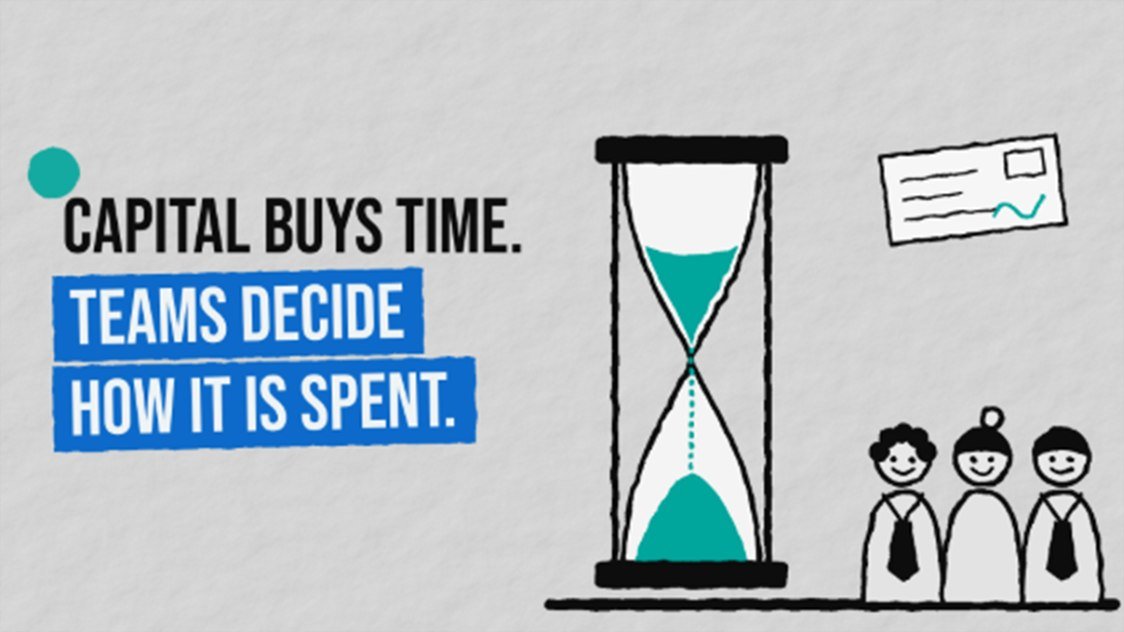
Capital buys time. Teams decide how it is spent.
The cheque is the start of the hiring problem, not the end of it.
Investors who ask these questions early do two things. They spot risk before it shows up in a missed quarter. And they give founders a chance to fix the gaps while there is still a runway.